
Happenings at the Fairmount Water Works Mussel Hatchery
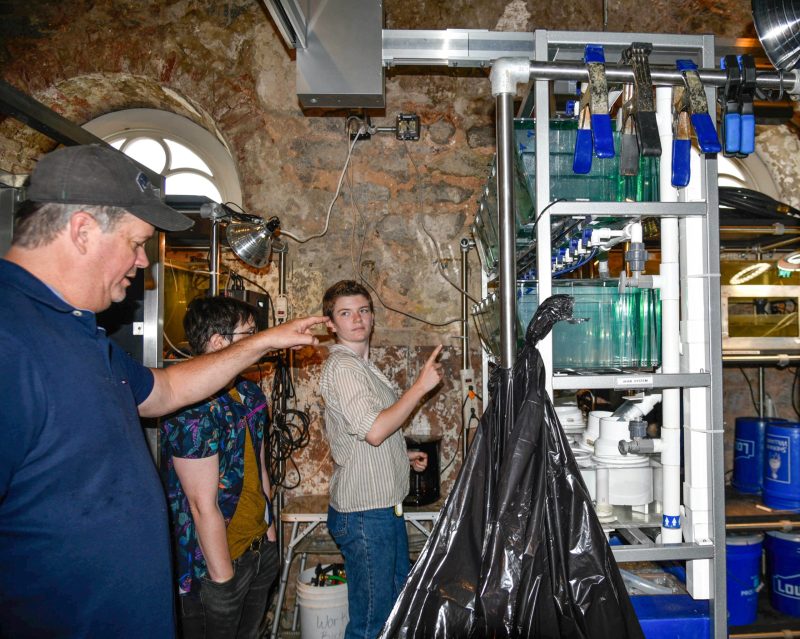
Even though the Fairmount Water Works Mussel Hatchery began operation in 2017 and the first propagation took place in 2018, the Hatchery has only had about 5 seasons of production. COVID and hurricanes Isaias and Ida prevented operations in the lab in 2020, 2021 and most of 2022. And yet, even so, over 100,000 baby mussels have been propagated to date. Each of the past 2 years have yielded over 30,000 mussels! Many of the mussels are used in laboratory studies, feasibility studies for grow-out (culturing) sites, and education programs (such as Mussels in the Field and Mussels in the Classroom). Next year, we aspire to hit 100,000 mussels in a single year!
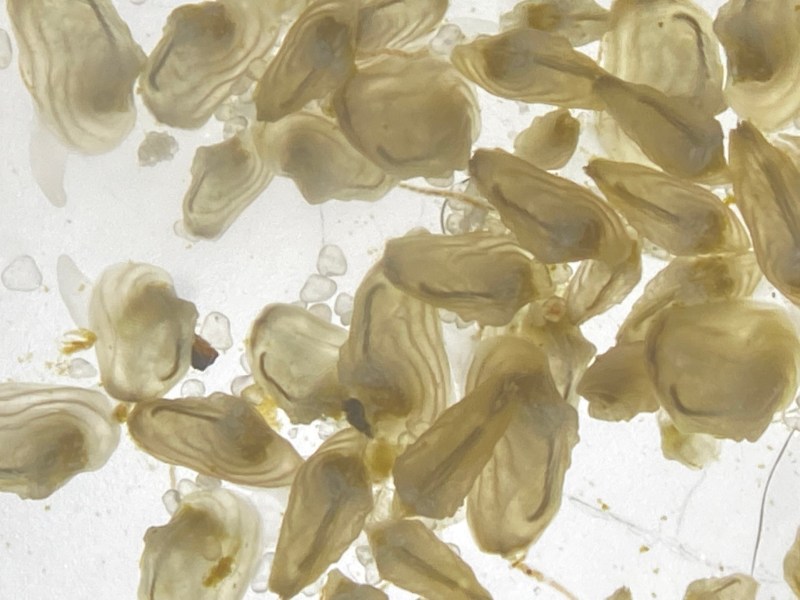
In the 5 productive years in the hatchery, we have had some major breakthroughs. We had the first known successful propagation of Alewife Floater (Utterbackiana implacata) with an alternative host (Hybrid Striped Bass). Yield was approximately 220 juveniles per host fish which is almost double the yield with it’s natural host, alewife shad. This has enabled us to seek more robust and cost effective means to propagate this foundational species.
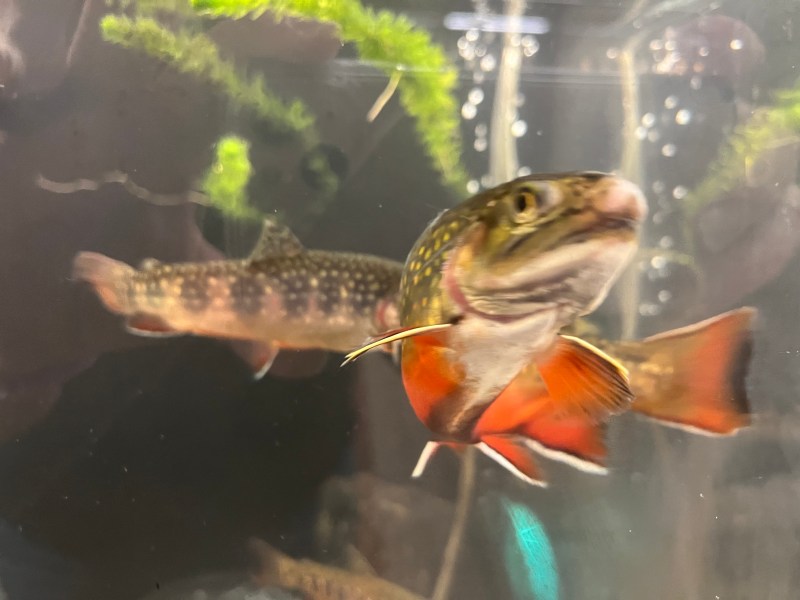
Similarly, we had the first known successful inoculation using native Brook Trout to propagate Eastern Elliptio (Elliptio complanata). Yield was approximately 100 per fish with a total production pf 8,500 juveniles.
To date, we’ve successfully propagated 4 of the 6 freshwater mussel taxa that have been identified in Philadelphia waterways: Eastern Pondmussel, Eastern Elliptio, Alewife Floater, Yellow Lampmussel. We intend to inoculate Tidewater Mucket with White Perch in 2026 and plan to partner with NJDEP to propagate a Threatened and Endangered species (Brook Floater) in 2026 and 2027.
We are now moving into the final phase of reintroduction. Traditionally, we’ve been inoculating, propagating, culturing and releasing in controlled (caged) environments to monitor efficacy and survivorship. We are now intending to reintroduce two species into the Manayunk Canal (Alewife Floater and Eastern Pondmussel).